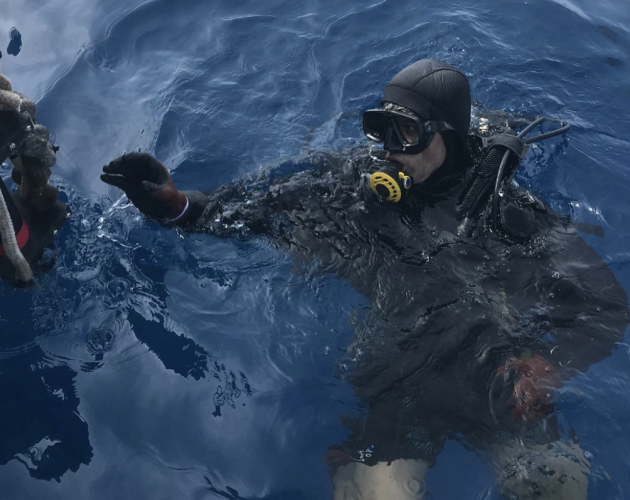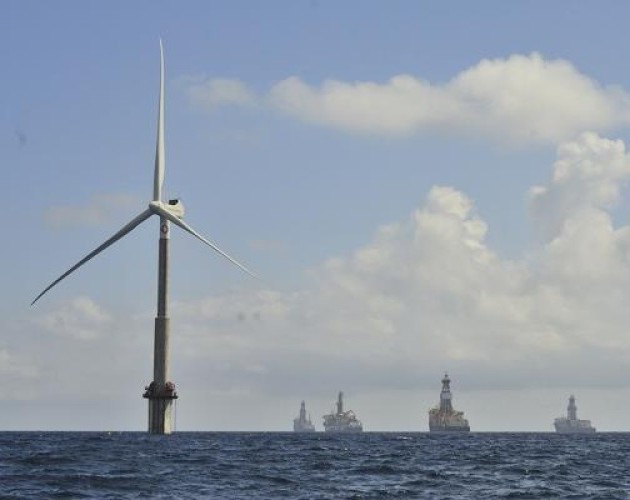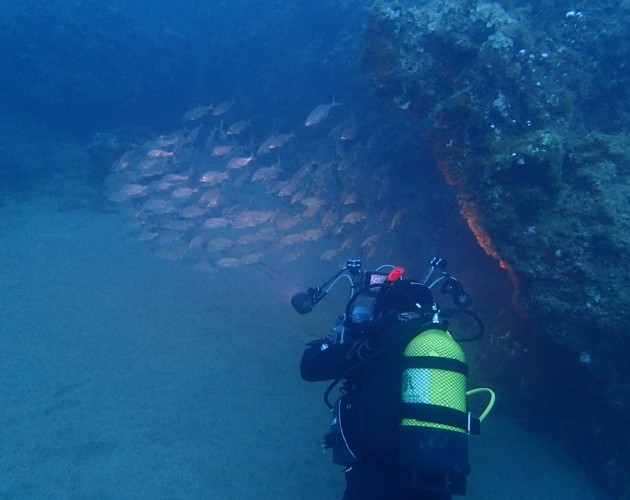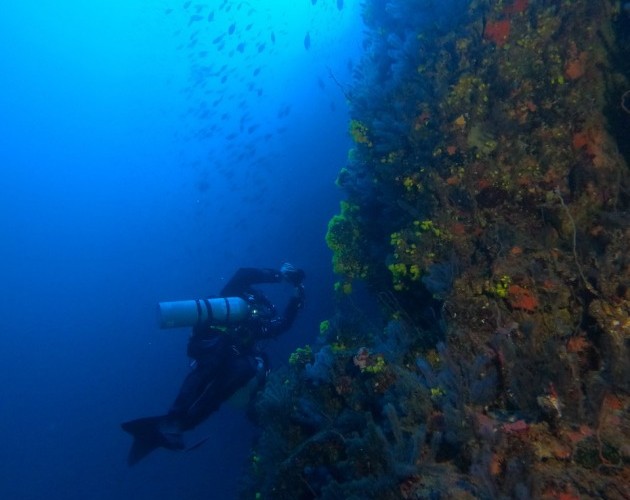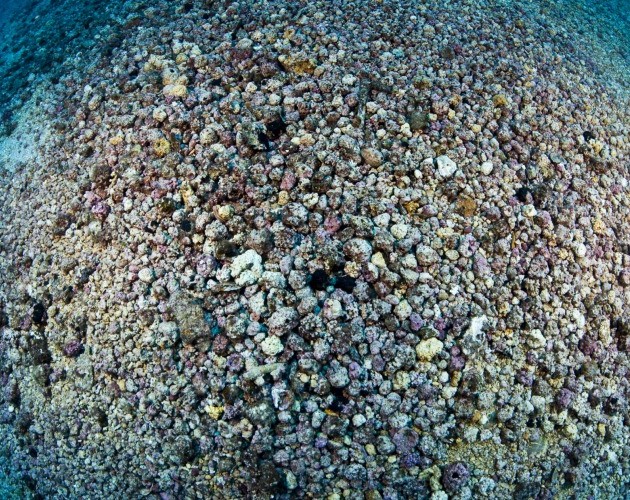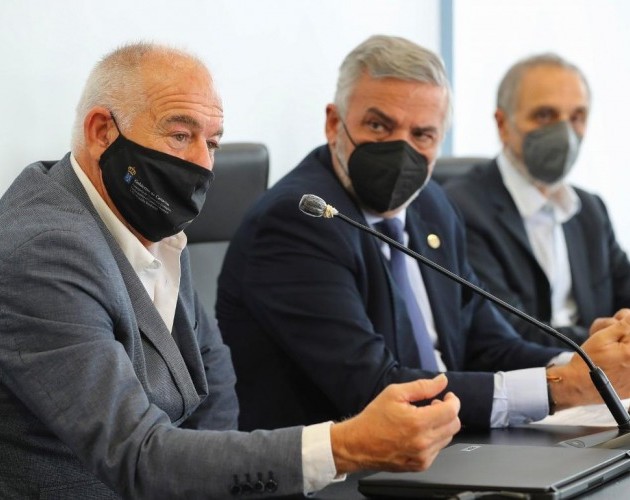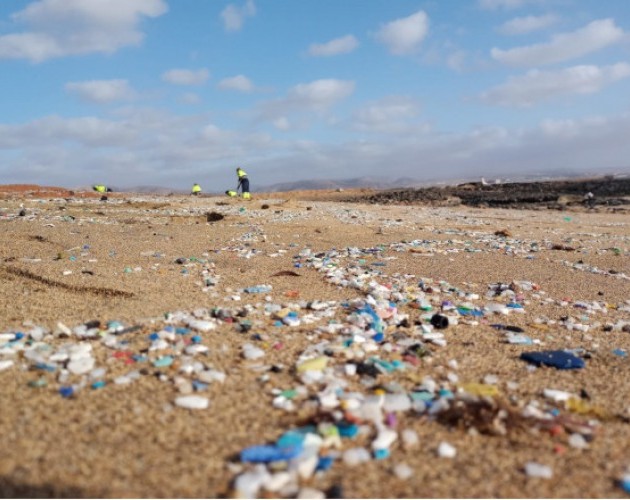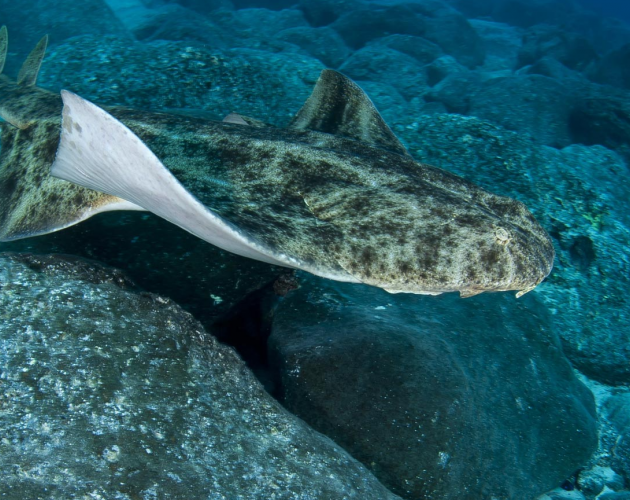

The University Institute ECOAQUA's Biodiversity and Conservation group (BIOCON), led by Fernando Tuya, addresses topics on marine biodiversity at different levels: local, in the Canary Islands, continental, across the archipelagos of Macaronesia, and at a more global level, seeking solutions for the conservation and management of the planet’s oceans. 

With a mean budget close to one million euros per year, over the last five years, the group cover coastal and ocean ecosystems and their biological communities, the impact of human actions (e.g. fishing), and how to manage the multiplicity of human actions, to ensure a sustainable management of the sea.

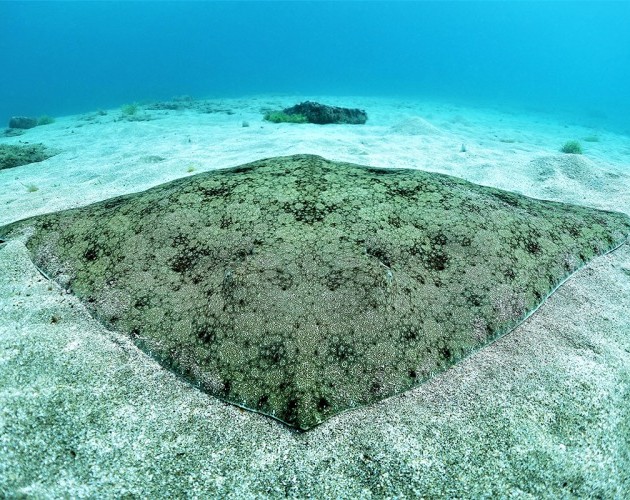
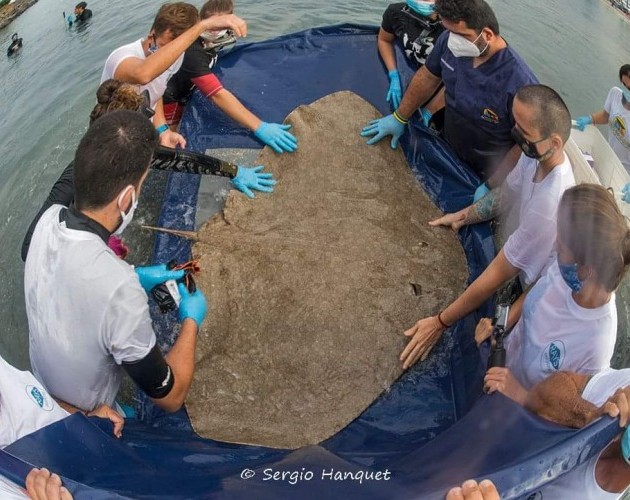
The group currently has twenty one researchers associated with different research lines and projects, including PLASMAR +, ACUSQUAT II, Angel Shark, CAPonLITTER, DG REFORM, MOVE ON, METOSERECO, MACRODO, MSP-OR, MARINE SABRES Rays of Paradise, and its participation in the drafting of the National Strategic Plan for the Protection of the Coast considering the effects of climate change. 

BIOCON has an extensive scientific production, as well as having directed a large number of Master's and Bachelor's degree theses and doctoral dissertations.

Researchers

  • Fernando Tuya Cortés

    PhD in Marine Sciences, he actually leads the BIOCON group. His research aims to explain patterns and processes in the organization of marine biodiversity in coastal ecosystems across different scales (space, time and taxonomy), to transfer such knowledge into the sustainable management of coastal ecosystems. He has published more than 130 articles in international journals and actively participated in international forums. He is an enthusiast of the sea, marine life and anything that can be done in the ocean.

    Academic position: Associate Professor at the ULPGC

    Corporate email:
    fernando.tuya@ulpgc.es


    accedaCRIS profile
    Google Scholar profile
    ORCID profile
    ResearchGate profile

  • Ricardo J. Haroun Tabraue

    Director of the University Institute ECOAQUA. Marine biologist, expert on systematics, sustainability and conservation of marine biota, with more than 170 scientific publications related to biodiversity and sustainable use of marine resources. Actively working on marine plants, marine spatial planning, environmental interactions, and ecosystem services. He is a member of the Commission on Ecosystem Management (CEM) from the UICN and an expert for the Government of the Canary Islands in the Biodiversity Work Programme for the Islands.

    Academic position: Professor at the ULPGC

    Corporate email:
    ricardo.haroun@ulpgc.es


    accedaCRIS profile
    ORCID profile
    ResearchGate profile

  • José Juan Castro Hernández

    PhD in Marine Sciences, and director of the Biology Department of the ULPGC, his research line focus on the assessment and management of artisanal and recreational fisheries. He has developed studies of the biology, ecology and behavior of fishes, crustaceans, and cephalopods. His research also includes the development and deployment of fish aggregation devices (FADs). He is President and Coordinator of the Commission on Fisheries Forum of the Atlantic Society of Oceanographers.

    Academic position: Associate Professor at the ULPGC

    Corporate email:
    jose.castro@ulpgc.es


    accedaCRIS profile
    ORCID profile
    ResearchGate profile

  • Antonio J. González Ramos

    PhD in Marine Sciences, lecturing at the ULPGC since 2001. He has been a lecturer in Oceanography and, Marine Ecology in the Marine Sciences Degree and in Doctorate and Master's Programmes at the University of Barcelona, the University of La Réunion (France DOM) and Rutgers University (New Jersey, USA). His research line focus on Operational Oceanography, Remote Sensing and Marine Robotics (operations with Autonomous Underwater Vehicles).

    Academic position: Associate Professor at the ULPGC

    Corporate email:
    antonio.ramos@ulpgc.es


    ORCID profile
    ResearchGate profile

  • Rodrigo Riera Elena

    PhD in Marine Ecology from the University of La Laguna, with an specialist in Zoology. His research interests focus on the effects of human-driven perturbations on the biodiversity and ecosystem function of coastal assemblages. He is broadly interested in small and large-scale patterns of coastal diversity (fish and inverts) to understand the role of species diversity, functional traits and interactions between species in community assembly.

    Academic position: Assistant Professor at the ULPGC

    Corporate email:
    rodrigo.riera@ulpgc.es


    accedaCRIS profile
    ORCID profile
    ResearchGate profile

  • Raül Triay Portella

    PhD in Marine Sciences, interested on the spatial distribution of marine invasive species and their effects on native ecosystems under a context of global change. Particularly, his efforts have been focused on the ecology and impact of invasive crabs and the establishment of criteria to control invasive marine species. 

    Academic position: Postdoctoral researcher at the ULPGC.

    Corporate email:
    raul.triay@ulpgc.es


    accedaCRIS profile
    ORCID profile
    ResearchGate profile

  • Inmaculada Herrera Rivero

    PhD in Marine Sciences from the ULPGC, specialist in Ecology, Physiology and Biochemistry of zooplankton. Her research focus  in the study of marine food webs, through biomarkers. She actively collaborates in the development of Marine Spatial Planning tools (Canary Islands), and in the National Strategic Plan for the Spanish Coastal Protection.

    Academic position: Postdoctoral researcher at the ULPGC

    Corporate email:
    inma.herrera@ulpgc.es


    accedaCRIS profile
    ORCID profile
    ResearchGate profile

  • Francisco Otero Ferrer

    PhD in Marine Sciences, interested on the functioning of different 'ecosystems engineers' species, such as rhodoliths seabeds or Black Coral Forests, and the effect of environmental drivers affecting benthic communities associated with these ecosystems. Moreover, he is involved in the development of tools for mapping these marine ecosystems and their services. He is a multifaceted researcher, taking part in international documentaries about nature.

    Academic position: Postdoctoral researcher

    Corporate email:
    francesco_25@hotmail.com


    ORCID profile
    ResearchGate profile

  • Andrej Abramic

    PhD in hydraulic and environmental engineering from the University Politecnica of Valencia, currently associated to the University Institute ECOAQUA of the ULPGC, with extensive experience in different fields of research. He currently focuses his work on coastal environmental problems and marine pollution, environmental impact assessment, operational application in maritime spatial planning, spatial data management and monitoring, common European policies related to the marine environment and data information exchange.

    Academic position: Postdoctoral researcher at the ULPGC

    Corporate email:
    andrej.abramic@ulpgc.es


    ResearchGate profile

  • Fernando Espino Rodríguez

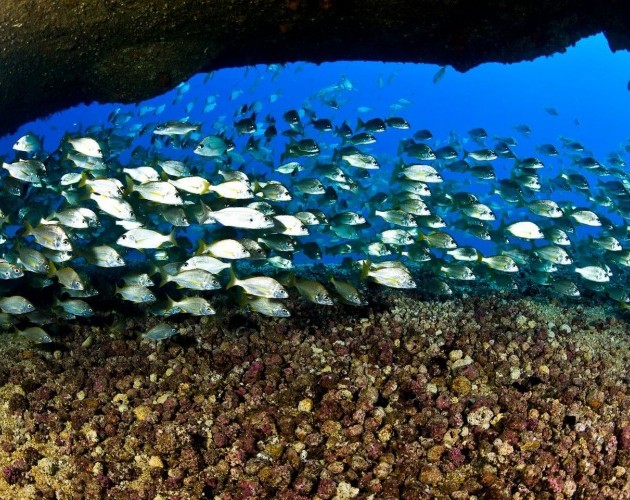
    PhD in Marine Sciences, he has taken part in several scientific projects and research on Cymodocea nodosa (sebadales) seagrass meadows of Canary Islands, particularly associated littoral fish populations. He is the author of several books and scientific publications, a recreational SCUBA diving instructor, scientific diver and technical diver with closed circuit equipment. He has an extensive catalogue of underwater photograph. He is a technician of at the Environmental Impact Service of the Canary Islands Government.
    Academic position: Researcher associated to University Institute ECOAQUA

    Corporate email:
    fesprod@gobiernodecanarias.org

  • Alejandro García Mendoza

    Degree in Geomatics and Topography and Master in Environmental Management, expert in GIS, standardization and publication of geographic data. He is responsible for the creation of the ULPGC Geoportal and the DSS INDIMAR® tool. He has collaborated with several publications related to marine spatial planning under the PLASMAR and PLAMAR+ projects.

    Academic position: GIS Manager of the ULPGC Geoportal

    Corporate email:
    alejandro.garcia@ulpgc.es


    ORCID profile

  • Yaiza Fernández Palacios

    PhD in Marine Sciences from the ULPGC. Her research interests includes the sustainability of coastal and marine systems, Integrated Coastal Zone Management, sustainability assessment through indicator systems, blue economy, responsible tourism, conservation, participative processes, citizen-science strategies, in order to improve public policies via  dissemination tools to raise environmental sensitivity. Her most recent research focuses on improving public policies and private sector practices to prevent marine litter.

    Academic position: Postdoctoral researcher at the ULPGC

    Corporate email:
    yaiza.fernandezpalacios@ulpgc.es


    ORCID profile
    ResearchGate profile

  • Candelaria Cecilia Ruano

    Diploma in Tourism from the ULPGC and Degree in Tourism from the UCAM. She holds an International Master's Degree in Tourism from the ULPGC, Master's Degree in Human Resources Management (UCM), and a Master's Degree in Sustainability and RSC (UNED-UJI). Her research focuses on topics related to responsible tourism, sustainability and corporate social responsibility, and participative processes to improve public policies. She also has extensive experience in project management and development with regional, national and international partnerships, as well as, in education related to the professional family of Hostelry and Tourism.

    Academic position: Researcher contracted

    Corporate email:
    candy.cecilia@ulpgc.es


    ORCID profile
    ResearchGate profile

  • David L. Jiménez Alvarado

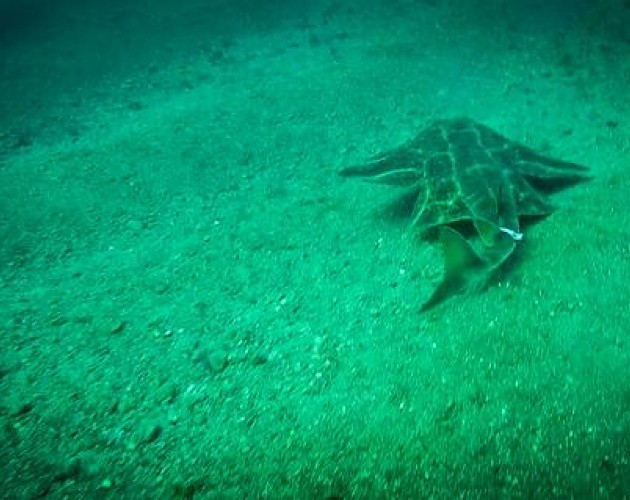
    PhD in Marine Sciences with a specialization in fisheries, particularly recreational fishing activities. For the last 7 years, he has focused his activity on the study of the biological and ecological behaviour of elasmobranch species (sharks and rays) throughout Europe and especially in the waters around the Canary Islands.

    Academic position: Postdoctoral researcher

    Corporate email:
    david.jimenez@ulpgc.es


    ORCID profile
    Scopus profile

  • Nestor E. Bosch Guerra

    PhD in Marine Ecology from the University of Western Australia. His research focuses on understanding the functioning of fish in marine ecosystems, from local to global scales. Part of his research takes place in a context of global change, to understand how anthropogenic impacts, such as climate change and fisheries, change the processes that support the functioning of marine ecosystems and the generation of associated ecosystem services.

    Academic position: Postdoctoral researcher in the framework of the Juan de La Cierva competitive program

    Corporate email:
    nestor.bosch@ulpgc.es


    ORCID profile
    ResearchGate profile

  • Víctor Cordero Penín

    Pre-doctoral researcher focused on promoting ecosystem-based management in integrated coastal and ocean planning and management. In recent years he has focused on understanding how marine ecosystem functioning supports multiple ecosystem services, how these are produced by coastal and marine activities, and how these cumulatively affect marine ecosystems.

    Academic position: PhD student of the ULPGC

    Corporate email:
    victor.cordero89@gmail.com


    accedaCRIS profile
    ORCID profile
    ResearchGate profile

  • Marcial Cosme de Esteban

    Degree in biology from the UAM. He is currently developing his thesis at the ULPGC.

    He aims to research different subtidal habitats, mainly focusing on rhodolith seabeds, to provide information for the conservation and improvement of Marine Protected Areas.

    Academic position: PhD student of the ULPGC

    Corporate email:
    marcial.cosme@ulpgc.es


    accedaCRIS profile
    ORCID profile
    ResearchGate profile

  • Sandra Navarro-Mayoral

    Graduated in Marine Sciences and Oceanography. Her research focuses on the study of macroecological interactions between marine habitats underpinned by bioengineering species, such as rhodolith seabeds and Cymodocea nodosa seagrass meadows. She has worked widely with amphipod communities and their use as indicators of environmental change.

    Academic position: PhD student of the ULPGC

    Corporate email:
    sandra.navarro@ulpgc.es


    accedaCRIS profile
    ORCID profile

  • Airam Guerra Marrero

    PhD candidate, graduated in Marine Sciences from the ULPGC and Extraordinary Degree Award of the Master's Degree in Sustainable Management of Fishing Resources of the ULPGC. His main research focuses on the fisheries biology of fish and cephalopods. Since 2017, he is associated with the BIOCON team, where he works on projects related to artisanal/recreational fisheries and biodiversity conservation.

    Academic position: PhD student of the ULPGC

    Corporate email:
    airam.guerra@ulpgc.es


    ORCID profile
    ResearchGate profile

  • Ana María Espino Ruano

    Graduated in Marine Science from the ULPGC. She completed a Master's degree in Sustainable Management of Fishery Resources from the same university. She is specialising in the biology, ecology and management of endangered species, especially elasmobranchs, through acoustic monitoring projects. Her research focuses on the ecology and behaviour of stingrays in the coastal area of the Canary Islands.

    Academic position: PhD student of the ULPGC

    Corporate email:
    ana.espino104@alu.ulpgc.es


    accedaCRIS profile
    ORCID profile
    ResearchGate profile

  • María Lorena Couce Montero

    PhD in Marine Sciences from the ULPGC, with a specialization in ecological modeling. Her research focuses on marine trophic networks and the ecosystem approach to fisheries management.

    Since 2017 she collaborates in different projects to Descriptors 3 and 4 of the Marine Strategy Framework Directive.

    Academic position: Postdoctoral researcher

    Corporate email:
    lorena.couce@ulpgc.es


    ORCID profile
    ResearchGate profile

  • Raibel Z. Núñez González

    Bachelor of Biology from the Universidad Central Venezuela, with a Master of Science in Marine Resource Management (CICIMAR-Instituto Politécnico Nacional, Mexico) with a special interest in ecology and interactions between species of marine ecosystems. She has participated in research projects with elasmobranchs and other marine organisms. She is currently doing her doctoral thesis on the ecology of sea urchin species on the island of Gran Canaria, with an emphasis on learning about their distribution, reproductive cycle, associated organisms, and the presence of pollutants.

    Academic position: PhD student of the ULPGC

    Corporate email:
    raibel.nunez@gmail.com

  • Jose Valdazo Hernández

    Degree in Marine Science with a Master degree in Coastal Management from the ULPGC. He is currently preparing his doctoral thesis at the same university while working as a technician at the environmental consulting company elittoral.

    His research focuses on the study of marine habitats underpinned by bioengineering brown macroalgae. He aims to research the changes in the distribution of Gongolaria abies-marina forests and their relationship with anthropogenic variables in a context of climate change.

    Academic position: PhD student of the ULPGC

    Corporate email:
    jose.valdazo101@alu.ulpgc.es

  • Jesús Padrón García

    Graduated in Biology from the University of La Laguna, with an interuniversity master's degree in Oceanography from the University of Las Palmas de Gran Canaria (ULPGC) and the University of Cadiz, specialising in Coastal Oceanography.

    His line of research is focused on the conservation of biological resources, planning and management of protected marine areas.

    Academic position: Project researcher.

    Corporate email:
    jesus.padron@fpct.ulpgc.es


    ORCID profile
    ResearchGate profile

  • Julia Loring Menéndez

    Graduated in Biology from the University of Seville, she holds a Master's degree in Biological Diversity and Environment, specialising in Biodiversity and Conservation of the Marine Environment, from the University of Malaga. She is currently working on her doctoral thesis at the ULPGC. Her line of research focuses on the study of the ecology and physiology of rhodolith beds, analysing their productivity, their contribution to the oceanic carbon cycle and the vulnerability of these organisms to climate change.

    Academic position: Predoctoral Research Fellow,

    Corporate email:
    julia.loring@ulpgc.es


    ORCID profile
    ResearchGate profile

  • Lucía Palacios Castillo

    Graduated in Marine Sciences from the University of Vigo, she completed a Master's degree in Marine Biology and Ecology at James Cook University in Australia, focusing on the study of coral reefs. This being her main line of research, she is currently collaborating in several projects on black coral forests in the Canary Islands in order to focus on future restoration projects.

    Academic position: Researcher at the ULPGC.

    Corporate email:
    lucia.palacios@ulpgc.es


  • Luz Marina Pulido Santiago

    Graduated in Computer Engineering from the ULPGC, she has experience in the creation of web and mobile applications. She is responsible for the development of these tools with the aim of optimising the analysis process and, in turn, helping to improve data-driven decision-making.
    Academic position: Full-Stack Developer / Project technician.

    Corporate email:
    luz.pulido@ulpgc.es


News

16/06/2026
The study carried out in Gran Canaria by researchers from the BIOCON group at the University Institute of the ULPGC,...
08/06/2026
The scientist from the BIOCON group at the University Institute of the ULPGC, who is also chair of the Working Group on...
02/06/2026
Ricardo Haroun, director of ECOAQUA, May Gómez, director of the EOMAR group, and BIOCON researchers Rodrigo Riera,...

Events

26/05/2026

A workshop organised by the Marine SABRES project, aimed primarily at those involved in research, management and conservation of the marine and coastal environment. The event focused on the status, conservation and restoration of seagrass habitats, addressing challenges, methodological approaches and findings associated with various research projects.
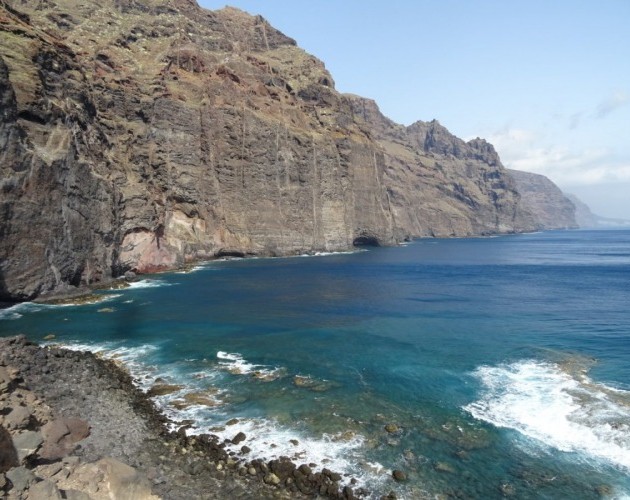
The workshop provided an opportunity to share case studies from different geographical areas, including the Canary Islands, Madeira, the Tuscan Archipelago (Mediterranean Sea) and Sweden. To this end, it featured the participation of research staff and representatives from the regional governments of Madeira and the Canary Islands, as well as from the University of Pisa, University College Cork and the University of Las Palmas de Gran Canaria.
The event took place on Tuesday 26 May 2026, from 09:00 to 14:30, in a hybrid format, at the facilities of the ULPGC Marine Science and Technology Park in Taliarte. The programme included an opening session of scientific talks, followed by a technical discussion between speakers and participants, aimed at exchanging knowledge, scientific experiences and approaches applied to the conservation and restoration of these marine ecosystems.

Date: 26 May 2026.

Venue: hybrid format

In-person:

ULPGC Marine Science and Technology Park (Taliarte)

Carretera de Taliarte s/n, Telde (Gran Canaria).

Online:

A Teams link has been provided for online participants.

Organised by: co-organised by the ECOAQUA Institute (ULPGC) and the University of Pisa (Italy), as part of the Marine SABRES project.

Participating research group: BIOCON.

In collaboration with: the Canary Islands Science and Technology Park Foundation of the ULPGC.

Title of the activity: Scientific workshop: “Conservation and restoration of seagrass meadows: challenges, approaches and outcomes.”

Participating researchers: Ricardo Haroun Tabraue (principal investigator of Marine SABRES and director of ECOAQUA), Fernando Tuya Cortés (director of BIOCON and expert on the workshop topic), Eduardo Infantes (member of BIOCON and expert on the workshop topic), Candy Cecilia Ruano and Jesús Padrón García (members of BIOCON and researchers with Marine SABRES).

WORKSHOP SCHEDULE

22/05/2026

Under the theme ‘Outermost regions and the sea’, this event is a key regional gathering for the nautical and maritime sector in the Canary Islands.

The ECOAQUA University Institute, part of the University of Las Palmas de Gran Canaria (ULPGC), is once again playing a key role in one of the most important events in the Canary Islands relating to the sea, the FIMAR 2026 International Sea Fair, which will take place from Friday 22 May and Sunday 24 May, at the Sanapú quay in Las Palmas de Gran Canaria, near the Poema del Mar aquarium and the Onda Atlántica walkway.

To this end, in addition to its now traditional stand, the university institute will offer, through its researchers, 13 of the 26 free public talks scheduled as part of the 15th edition of this major event – a figure that is almost double the number given last year, when it delivered a total of seven.

The fair is sponsored by the Cabildo of Gran Canaria, Las Palmas de Gran Canaria City Council and the Port Authority of Las Palmas, and organised by Infecar Feria de Gran Canaria and Ciudad de Mar. Among the fair’s activities is the dissemination of scientific knowledge relating to the marine and maritime environment.

Date: 22, 23 and 24 May 2026.

Venue: Muelle Sanapú, Las Palmas de Gran Canaria.

Organisers: INFECAR and Ciudad de Mar, Las Palmas de Gran Canaria City Council.

In collaboration with: Cabildo of Gran Canaria, Las Palmas de Gran Canaria City Council, Las Palmas Port Authority.

Participating research groups: EOMAR, OFYGA, GIA, BIOCON, TOTMA.

ECOAQUA SCHEDULE AT FIMAR 2026

EVENT WEBSITE

20/01/2026-22/01/2026

Consultation workshop for the Marine SABRES project, aimed primarily at people involved in the coastal and marine environment, including management, businesses, the tourism and fishing sectors, NGDOs and other non-profit organizations, research, etc. The purpose of the workshop is to present and test the decision-making support tools that have been developed thanks to the contributions received in previous workshops, which aim to provide a basis for sustainable management of the coastal and marine environment in the Canary Islands and Macaronesia that is accessible to society. To participate, you must have a laptop and mobile phone, and you must register using the registration form. The official language of the event is English, with Spanish interpretation available at all times.

Dates: Tuesday, January 20, 2026 (Fuerteventura), and Thursday, January 22, 2026 (Gran Canaria).

Time: From 9:00 a.m. to 1:00 p.m. (followed by coworking space with lunch included).

Venue:

-Workshop on Tuesday, January 20:

Fuerteventura Island Youth Center
c/ Dr. Fleming, 1, Puerto del Rosario

-Workshop on Thursday, January 22:

ULPGC Marine Science and Technology Park (Taliarte)

Carretera de Taliarte s/n, Telde (Gran Canaria).

Participating researchers: Ricardo Haroun Tabraue (principal investigator), Candy Cecilia Ruano, and Jesús Padrón García.

Organization: ECOAQUA Institute (ULPGC) and Hummel Foundation for Sustainable Solutions (HuFoSS) (Netherlands).

Collaboration: Canary Islands Foundation for the ULPGC Science and Technology Park and the Fuerteventura Island Council.

Participating research group: BIOCON.

SUBSCRIPTION AND SCHEDULE FUERTEVENTURA

SUBSCRIPTION AND SCHEDULE GRAN CANARIA

logo-ulpgc6

The University Institute ECOAQUA is a research centre that belongs to the University of Las Palmas de Gran Canaria, a public institution that offers a wide range of degrees in all the major areas of knowledge, with the aim of providing comprehensive training to those who come to it, in a commitment based on innovation, quality and internationalisation.

VISIT THE ULPGC